Because pipe sizing seems unclear at first, many people ask, “Is copper pipe measured ID or OD?” When you measure a pipe marked “½ inch,” it often looks like the wrong size. This leads to uncertainty, errors, and financial waste. This problem affects purchasers, DIYers, plumbers, and students. One incorrect measurement may result in leaks, subpar fittings, or store returns.
The nomenclature of copper pipes differs from their actual measurement, which causes confusion. Inside diameter (ID) is used in certain pipelines. Outside diameter (OD) is used by others. Product labels may not always provide a clear explanation of the unique regulations that apply to copper pipe. To make matters worse, conflicting responses are frequently found in online forums, videos, and retail establishments.
That misconception is cleared up in this article. First, you will receive a prompt, unambiguous response. After that, you’ll discover why copper pipe size operates in this manner, how to steer clear of typical pitfalls, and how to select the appropriate pipe or fitting. By the end, you will know exactly whether copper pipe is measured by ID or OD and use that knowledge with confidence
Is Copper Pipe Measured ID or OD in Inches
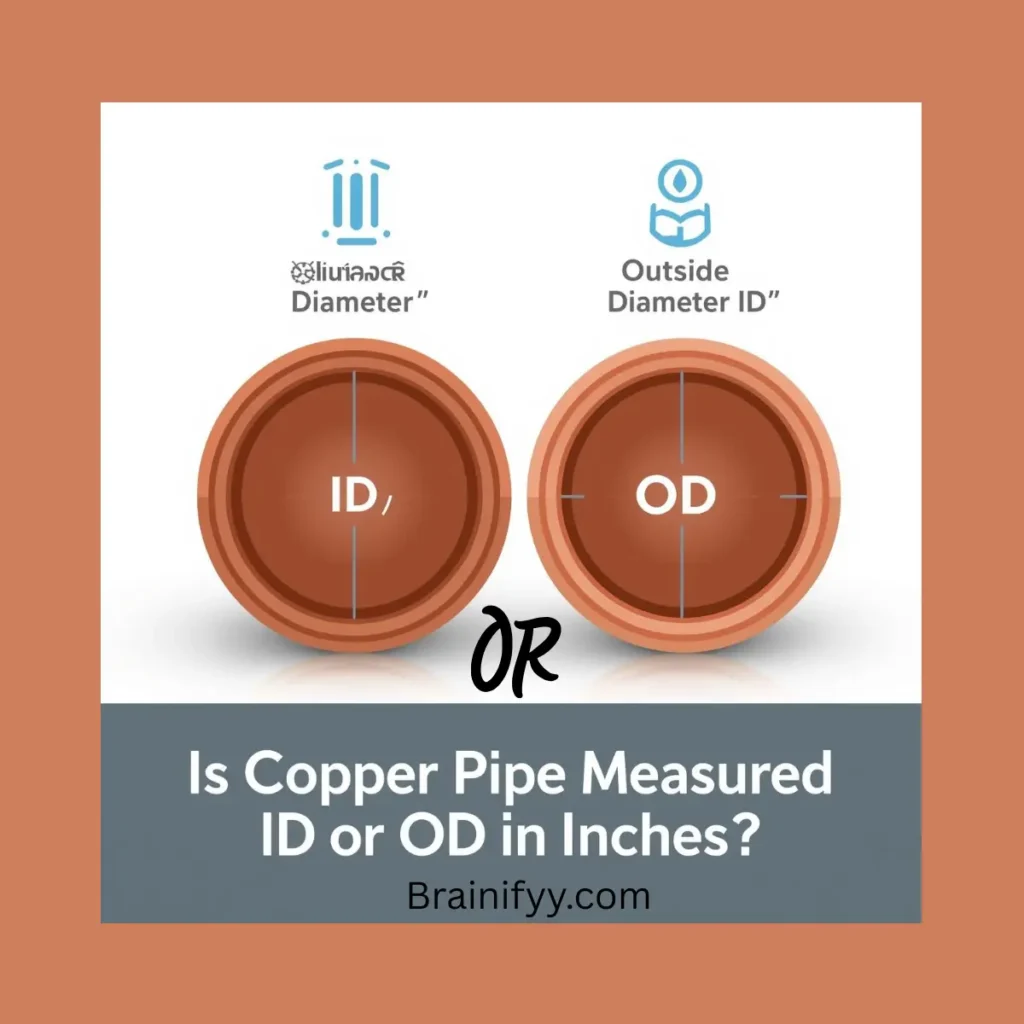
Copper pipe measured in inches follows a nominal sizing system, not the exact physical measurement. This means the inch size printed on the pipe refers to the approximate inside diameter (ID), not the outside diameter (OD). For example, a ½-inch copper pipe does not measure ½ inch across the outside. Instead, its outside diameter is about ⅝ inch, while the inside space is close to ½ inch. This system helps plumbers match pipes with fittings easily. All common copper types, such as Type K, Type L, and Type M, use the same inch-based naming rule. Even though wall thickness changes, the outside diameter stays the same for a given nominal size. Understanding this inch measurement rule prevents fitting errors and makes pipe selection faster and more accurate.
Is Copper Pipe Measured ID or OD – Quick Answer
Copper pipe is measured by its nominal size, which is based on the inside diameter (ID), not the outside diameter (OD).
Example:
- A ½-inch copper pipe has an OD of about ⅝ inch.
- The name “½ inch” refers to the approximate inside diameter, not the outside.
This is why copper pipes often look bigger than their labeled size.
The Origin of Is Copper Pipe Measured ID or OD
Copper pipe sizing dates back many years. Early plumbing systems needed a simple way to describe how much water could flow through a pipe. Flow depends on the inside space, not the outside width. So, pipe names were based on inside diameter.
Over time, pipe walls became thicker and stronger. The outside diameter changed, but the name stayed the same. This kept fittings and tools consistent across generations.
There are no spelling differences in this keyword. The confusion is not about language. It is about measurement tradition and old industry standards that are still used today.
British English vs American English Spelling
There is no spelling difference for this keyword in British or American English. Terms like ID, OD, copper pipe, measured are spelled the same.
Still, people sometimes expect a difference, so here is a clear comparison.
| Term | American English | British English |
|---|---|---|
| Copper pipe | Copper pipe | Copper pipe |
| Measured | Measured | Measured |
| Inside diameter (ID) | ID | ID |
| Outside diameter (OD) | OD | OD |
Key point: The spelling is the same. Only measurement standards may vary slightly by region.
Which Spelling Should You Use?
You can use the same spelling everywhere.
- United States: Use standard terms like ID, OD, and nominal size.
- UK & Commonwealth: Same spelling, same abbreviations.
- Global audience: Use simple words and explain ID and OD clearly.
Focus on clarity, not spelling changes.
Common Mistakes with Is Copper Pipe Measured ID or OD
Here are frequent errors people make:
- Measuring OD and assuming it is the pipe size
✔ Fix: Check the nominal size chart. - Buying fittings based on OD
✔ Fix: Copper fittings match nominal pipe size. - Mixing copper pipe with tube sizing rules
✔ Fix: Copper pipe is not sized like steel or plastic tube. - Using a ruler instead of calipers
✔ Fix: Use proper tools for accuracy.
Is Copper Pipe Measured ID or OD in Everyday Examples
Email:
“Please confirm if this ¾-inch copper pipe uses nominal ID sizing.”
News:
“Plumbing errors often happen when buyers confuse ID and OD in copper pipe sizing.”
Social Media:
“Reminder: copper pipe size ≠ outside diameter. Always check nominal size.”
Formal Writing:
““Manufacturers identify copper pipe dimensions by nominal inside diameter, not actual outside diameter.””
Is Copper Pipe Measured ID or OD – Google Trends & Usage Data
Search interest for “is copper pipe measured id or od” is high in:
- United States
- Canada
- UK
- Australia
The keyword is most popular in:
- DIY home repair
- Plumbing education
- Online hardware shopping
People usually search this term before buying or after a sizing mistake.
Keyword Variations Comparison
| Keyword Variation | Intent |
|---|---|
| Is copper pipe measured ID or OD | Clear sizing answer |
| Copper pipe ID vs OD | Comparison |
| How copper pipe is measured | Beginner learning |
| Copper pipe nominal size | Technical detail |
FAQs
1. Is copper tubing measured by ID or OD?
Copper pipe uses nominal ID. The OD is larger.
2. Why does my copper pipe measure bigger than its label?
Because the label is nominal, not actual size.
3. Do copper fittings match ID or OD?
They match the nominal pipe size.
4.“Do manufacturers measure Type L copper pipe the same way?”
Yes. Type L, M, and K all use nominal sizing.
5. Can I use OD to choose fittings?
No. Always use nominal size charts.
6. Is copper pipe sizing the same worldwide?
Mostly yes, but metric systems may differ slightly.
7. How do I measure copper pipe correctly?
Measure OD, then check a nominal size chart.
Conclusion
“Understanding whether manufacturers measure copper pipe by ID or OD saves time, money, and stress. The short answer is simple: manufacturers name copper pipe by its nominal inside diameter, not its outside diameter.”. This system originates from old plumbing standards that focus on water flow rather than physical width. Over time, manufacturers changed the pipe walls, but they kept the original naming.
British and American English do not differ in spelling for this term. The real issue comes from measurement confusion, not language. People often measure the outside of a pipe and assume it matches the labeled size, which causes wrong fittings and poor connections.
To avoid problems, check a copper pipe size chart, use proper tools, and match fittings to the nominal size. Whether you are a DIY user, student, or professional, learning this rule builds confidence. Once you grasp it, copper pipe sizing becomes clear and simple.