Choosing between almond milk and coconut milk has become a common question for health-conscious consumers, vegans, and those with dietary restrictions. People search “is almond or coconut milk better” because both options are plant-based, low in calories, and offer different flavors and nutritional benefits. Yet, deciding which one suits your diet, recipes, or taste preference can be confusing. Almond milk is known for its mild, nutty flavor and low calorie count, while coconut milk is creamier, richer in taste, and better for tropical dishes or desserts.
This article clears up the confusion by comparing almond milk and coconut milk across nutrition, flavor, and versatility. You’ll get quick answers, detailed explanations, real-world usage examples, and professional advice. By the end, you’ll know which milk works best for your lifestyle, cooking, or health goals.
Coconut Milk vs Almond Milk vs Oat Milk
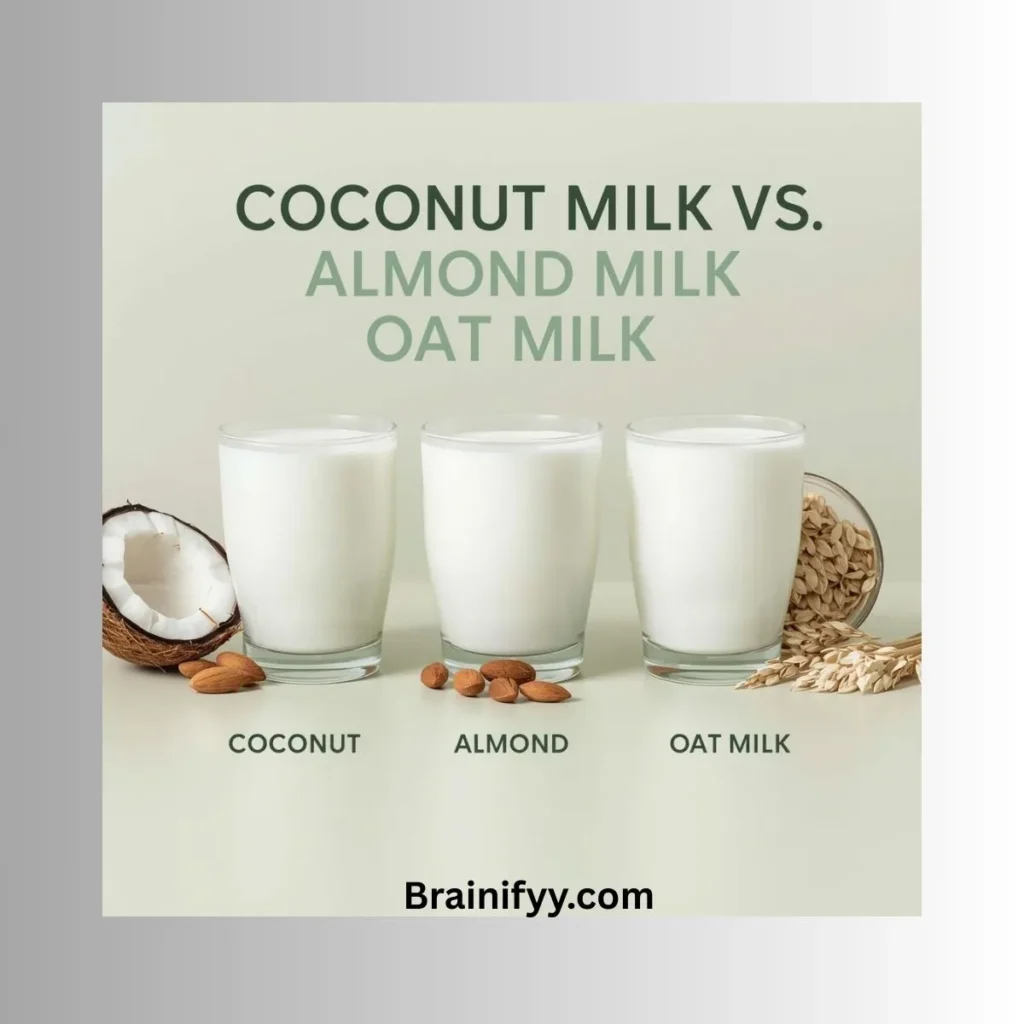
When choosing a plant-based milk, it helps to compare coconut milk, almond milk, and oat milk side by side. Almond milk is low in calories and has a mild, nutty flavor, making it perfect for smoothies, cereal, and coffee. Coconut milk is rich and creamy, ideal for cooking, curries, and desserts, but it’s higher in saturated fat, especially canned versions. Oat milk has gained popularity for its naturally sweet taste and creamy texture, making it a great coffee creamer and baking substitute. It’s also higher in carbs but contains fiber that supports digestion. Your choice depends on dietary needs, recipe requirements, and personal taste—almond for lightness, coconut for richness, and oat for creaminess and versatility.
Is Almond or Coconut Milk Better – Quick Answer
The answer depends on your priorities:
| Milk Type | Best For | Key Benefits |
|---|---|---|
| Almond Milk | Low-calorie diets, smoothies, cereal | Low in calories, vitamin E, mild nutty taste |
| Coconut Milk | Creamy recipes, curries, desserts | Rich in flavor, good for cooking, contains MCTs |
- Example: Use almond milk in coffee or breakfast cereal for a light taste. Use coconut milk in Thai curries or desserts for creaminess.
- Summary: For everyday low-calorie use → almond milk. For cooking and rich flavor → coconut milk.
The Origin of “Is Almond or Coconut Milk Better”
The debate over almond vs. coconut milk stems from centuries-old plant-based traditions. Almond milk dates back to the Middle Ages in Europe, often used as a milk alternative during fasting periods. Coconut milk has roots in tropical Asian and Caribbean cuisines, used for cooking and sweet dishes.
The phrase “is almond or coconut milk better” emerged in modern nutrition discourse as consumers compare plant-based milks for health and taste. Its popularity is tied to rising vegan and lactose-free diets worldwide.
British English vs American English Spelling
While the main keyword is a full phrase rather than a single word, regional spelling differences exist in related terms like “favourite/favorite” or “flavour/flavor” in recipes and product labels.
| Term | British English | American English |
|---|---|---|
| Favorite/Favourite | Favourite | Favorite |
| Flavor/Flavour | Flavour | Flavor |
| Aluminium/Aluminum | Aluminium | Aluminum |
- Example: A UK recipe might say “add your favourite milk”, while a US recipe will use “favorite milk.”
- Spelling differences rarely affect understanding but can influence readability for your audience.
Which Spelling Should You Use?
- US audience: Use American English (favorite, flavor).
- UK & Commonwealth audience: Use British English (favourite, flavour).
- Global content: If unsure, US English is widely understood, but consider your primary readers.
Common Mistakes with “Is Almond or Coconut Milk Better”
- Confusing milk types: Almond milk ≠ coconut milk; each has unique nutrition.
- Assuming one is always healthier: Depends on calories, fat, sugar, and recipe needs.
- Mislabeling recipes: Using coconut milks in a recipe calling for almond milks changes taste.
- Ignoring added sugars: Many store-bought milks have added sugar; check labels.
Correction Tip: Always read labels and consider the recipe or dietary goal before choosing.
“Is Almond or Coconut Milk Better” in Everyday Examples
- Email: “Hi team, for the recipe test, should we use almond or coconut milk?”
- Social Media: “Trying to decide: almonds or coconut milk for my smoothie?”
- News: “Health experts debate: is almonds or coconut milk better for weight loss?”
- Formal Writing: “When considering plant-based alternatives, one must evaluate: is almond or coconut milk better in terms of nutrition?”
Is Almond or Coconut Milk Better – Google Trends & Usage Data
Google Trends shows that searches for “is almond or coconut milk better” spike during January (New Year diets) and summer (smoothie season).
- Top countries searching: US, UK, Canada, Australia.
- Context: Mostly related to health, recipes, and vegan lifestyle.
Comparison Table: Almond Milk vs Coconut Milk
| Feature | Almond Milk | Coconut Milk |
|---|---|---|
| Calories | 30–50 per cup | 45–60 per cup (light), 450–550 (canned) |
| Fat | 2–3 g | 4–5 g (light), 45–55 g (canned) |
| Protein | 1 g | 0–1 g |
| Flavor | Mild, nutty | Rich, creamy |
| Best Uses | Coffee, cereal, smoothies | Curries, desserts, cooking |
| Popularity | Very high in US & UK | High in tropical regions |
FAQs
- Is almond milk healthier than coconut milk?
- Almond milk is lower in calories, but coconut milk has beneficial fats (MCTs).
- Which milk is better for smoothies?
- Almond milk for lighter smoothies, coconut milk for creamy tropical blends.
- Can I use them interchangeably in recipes?
- Yes, but taste and texture may change.
- Is coconut milk good for weight loss?
- Light coconut milk can fit a diet, but canned coconut milk is high in calories.
- Does almond milk have protein?
- Yes, but very little (around 1g per cup).
- Which milk is better for baking?
- Coconut milk adds richness; almond milk keeps baked goods lighter.
- Are there added sugars in almonds or coconut milk?
- Many store-bought options contain sugar. Always check labels.
Conclusion
Deciding “is almond or coconut milk better” depends on your diet, taste preferences, and recipes. Almond milk is ideal for low-calorie, everyday use, while coconut milk excels in cooking, curries, and desserts thanks to its creamy texture. Understanding nutritional differences, checking labels, and using the right milk for the context ensures the best results. By following this guide, you can confidently choose the milk that matches your lifestyle, avoid common mistakes, and make informed choices when cooking or shopping. Whether for health, taste, or convenience, knowing the benefits of each milk helps you enjoy plant-based options without compromise.